



Why Awe is the Most Important Mental Wellness Trend of 2026
Feeling awe can help reduce stress, shift your focus outward, and lift your mood.
Key Takeaways:
- Awe reduces self-focus and promotes prosocial behavior, making people more generous, empathetic, and connected to others.
- Regular awe experiences are linked to improved mental health, including reduced depression and stress, and increased life satisfaction.
- Awe may benefit physical health by lowering levels of inflammation-related biomarkers, such as inflammatory cytokines.
- Exposure to awe can enhance creative, logical, and scientific thinking by expanding cognitive flexibility and mental perspective.
- Brief, everyday moments—like nature walks or immersive learning—can reliably spark awe and support overall well-being.
Over and over again while floating through space, astronauts looking down on Earth experience the “overview effect”: a state of awe so profound that it makes them feel intensely connected to humanity and the planet itself long after they return home.
Though this particular psychological phenomenon might sound otherworldly and out of reach, study after study has established that this kind of self-transcendence is possible right here on Earth. Early researchers found that surveying a landscape from up high—say, a mountaintop—could elicit the same effect. And more recently, scientists have broadened our understanding of awe to include any observation of vastness, literal or conceptual. Think gazing upon the Great Barrier Reef, learning about the history of civilization, or pondering the many influences of the Cubists.
What’s fundamental to all of these experiences is a positive, intense emotion that’s distinct from others in its wide range of mental health benefits.
Incorporating awe into one’s routine this year, then, is perhaps the easiest way to feel—and even act—better. Here’s why, and how, to do so.
Why awe makes us more selfless
Researchers have found that people enduring mental health struggles usually fixate on themselves. But awe has the opposite effect.
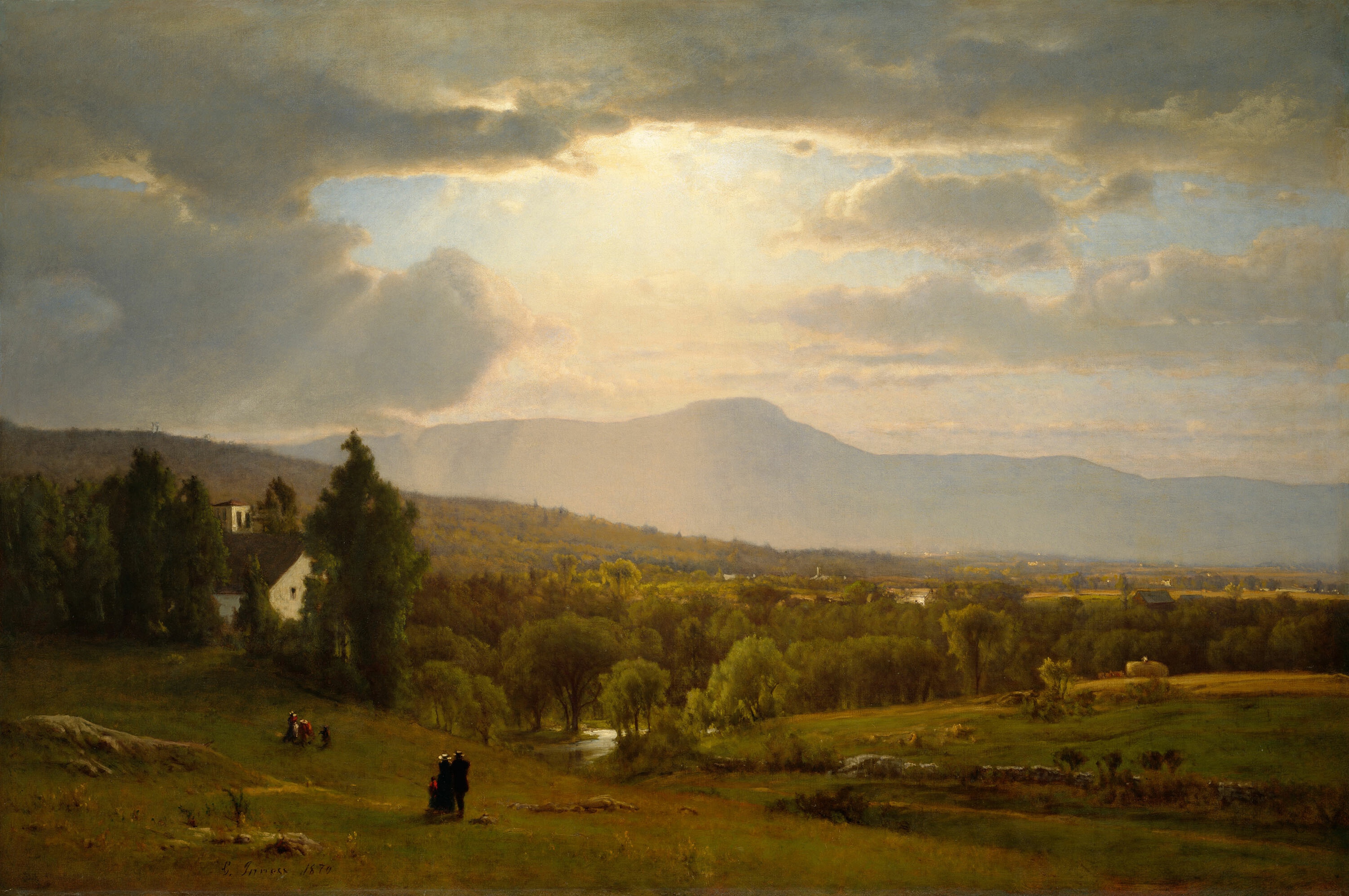
Those experiencing this emotion tend to identify with more universal categories than individual ones. In diary, lab, and nature studies, scientists have repeatedly witnessed how awe can bring on a reduction in self-focus. One such study asked participants to draw themselves after visiting one of the most awe-inspiring viewpoints at Yosemite National Park. These visitors depicted themselves as physically smaller in illustrations than those who hadn’t visited the site.
And this cognitive shift doesn’t just have individual effects. Research has tied experiences of awe to volunteering time and donating money, benefiting society at large. These experiences don’t have to be long; studies often deploy clips of nature and other brief stimuli to stir this emotion.
The Humane Space’s guided Awe Walks can lead you to awe in no time. Via 10-minute audio experiences, they invite you to contemplate your surroundings—a tree, a garden—and, as you do, ponder your connections to the world and others.
How awe improves our mental health
One of the most prominent awe-related findings of 2025 could have a major effect on people’s health in 2026 and beyond: A study in Scientific Reports found that people with long COVID who were encouraged to undertake awe-seeking activities, such as walking in nature, reported less depression and stress, and greater well-being, than those weren’t given these guidelines.
This research builds on prior studies that have shown beneficial mental health effects for the general population. Awe has been linked to greater well-being and life satisfaction. One study found that adults exposed to clips of nature experienced more happiness and less negative thinking than others.
Even when you’re unable to see or hear nature, The Humane Space’s Mind Journeys® can transport you there. These guided visualizations allow you to envision your own awe-inspiring scenes or specific ones, such as the Grand Canyon, and give your mind a boost.
How awe improves our physical health
These days, everyone’s asking about how they can reduce inflammation. Chronically high levels of inflammatory cytokines, for example, are associated with poorer health.
While there’s no quick fix for chronic inflammation, physical changes to your routine aren’t the only way to improve this condition. Those who regularly experience awe often have lower levels of inflammatory cytokines, one oft-cited study found.
Why awe makes us better thinkers
When we encounter something vast, it expands the potential of our minds. Researchers have found that awe boosts our ability to think creatively, logically, and even scientifically. This neuroplasticity is a literal reorganization of our brains. Talk about a shift.
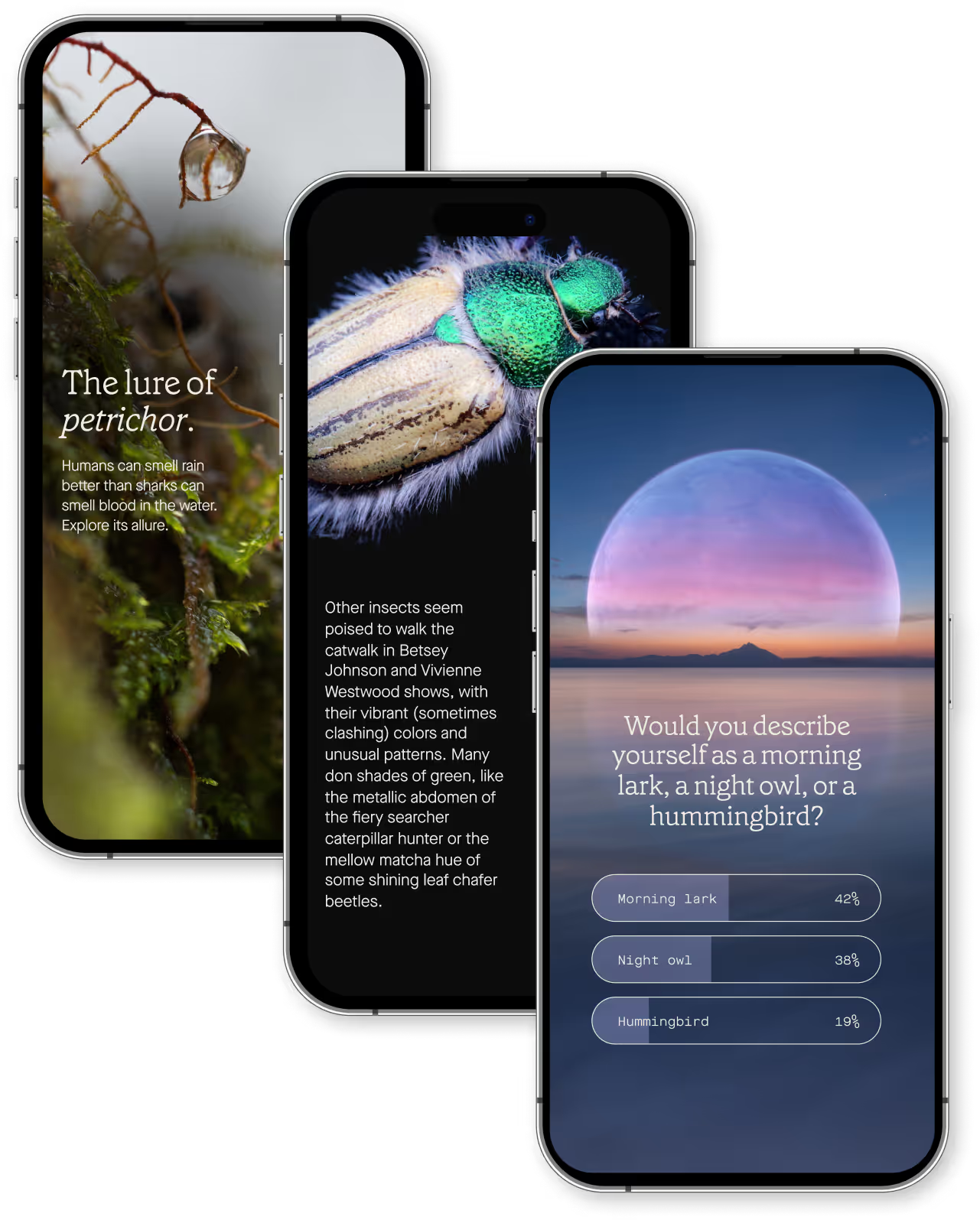
So how does one begin to access this evolution? Consider The Humane Space’s immersive deep-dives into science, history, art, and more as your daily gateways to awe. Have you ever wondered about the origins of water or the world’s first illustrations? Or the forests of Scotland and the creatures of Kakadu National Park?
Maybe you have, maybe you haven’t. But either way, by opening your mind to these subjects, you’re bound to encounter awe along the way.
References
Bai, Yang, et al. “Awe, Daily Stress, and Elevated Life Satisfaction.” Journal of Personality and Social Psychology, vol. 120, no. 4, 2021, pp. 837–860, doi.org/10.1037/pspa0000267.
Bai, Yang, et al. “Awe, the Diminished Self, and Collective Engagement: Universals and Cultural Variations in the Small Self.” Journal of Personality and Social Psychology, vol. 113, no. 2, 2017, pp. 185–209, doi.org/10.1037/pspa0000087.
Bogaert, Liesbeth, et al. “Nature Lifts When Feeling Low: Daily High and Low Awe Nature Clips Decrease Repetitive Negative Thinking and Dampening and Increase Subjective Happiness in Adults.” Applied Psychology: Health and Well-Being, vol. 16, no. 4, 2024, doi.org/10.1111/aphw.12578.
Chirico, Alice, et al. “Awe Enhances Creative Thinking: An Experimental Study.” Creativity Research Journal, vol. 30, no. 2, 2018, pp. 123–131, doi.org/10.1080/10400419.2018.1446491.
Gottlieb, Sara, et al. “Awe as a Scientific Emotion.” Cognitive Science, vol. 42, no. 6, 2018, pp. 2081–2094, doi.org/10.1111/cogs.12648.
Griskevicius, Vladas, et al. “Influence of Different Positive Emotions on Persuasion Processing: A Functional Evolutionary Approach.” Emotion, vol. 10, no. 2, 2010, pp. 190–206, psycnet.apa.org/doiLanding?doi=10.1037%2Fa0018421.
Guan, Fang, et al. “Awe and Prosocial Tendency.” Current Psychology, vol. 38, 2019, pp. 1033–1041, doi.org/10.1007/s12144-019-00244-7.
Joye, Yannick, and Jan Willem Bolderdijk. “An Exploratory Study into the Effects of Extraordinary Nature on Emotions, Mood, and Prosociality.” Frontiers in Psychology, vol. 5, 2015, doi.org/10.3389/fpsyg.2014.01577.
Monroy, María, and Dacher Keltner. “Awe as a Pathway to Mental and Physical Health.” Perspectives on Psychological Science, vol. 18, no. 2, 2022, pp. 186-197, doi.org/10.1177/17456916221094856.
Monroy, María, et al. “Awe Reduces Depressive Symptoms and Improves Well-Being in a Randomized-Controlled Clinical Trial.” Scientific Reports, vol. 15, 2025, Article 16453, doi.org/10.1038/s41598-025-96555-w.
Mor, Nilly, and Jennifer Winquist. “Self-Focused Attention and Negative Affect: A Meta-Analysis.” Psychological Bulletin, vol. 128, no. 4, 2002, pp. 638–662, doi.org/10.1037/0033-2909.128.4.638.
Rudd, Melanie, et al. “Awe Expands People’s Perception of Time, Alters Decision Making, and Enhances Well-Being.” Psychological Science, vol. 23, no. 10, 2012, pp. 1130–1136, journals.sagepub.com/doi/10.1177/0956797612438731.
Shiota, Michelle N., et al. “The Nature of Awe: Elicitors, Appraisals, and Effects on Self-Concept.” Cognition and Emotion, vol. 21, no. 5, 2007, pp. 944–963, doi.org/10.1080/02699930600923668.
Stellar, Jennifer E., et al. “Positive Affect and Markers of Inflammation: Discrete Positive Emotions Predict Lower Levels of Inflammatory Cytokines.” Emotion, vol. 15, no. 2, 2015, pp. 129–133, psycnet.apa.org/doiLanding?doi=10.1037%2Femo0000033.
Yaden, David B., et al. “The Overview Effect: Awe and Self-Transcendent Experience in Space Flight.” Psychology of Consciousness: Theory, Research, and Practice, vol. 3, no. 1, 2016, pp. 1–11, doi.org/10.1037/cns0000086.
Want to keep your mind curious?






Build your practice of daily discovery.
7 days free.





.svg)


_Website_221229.svg)
