


Ben Rein


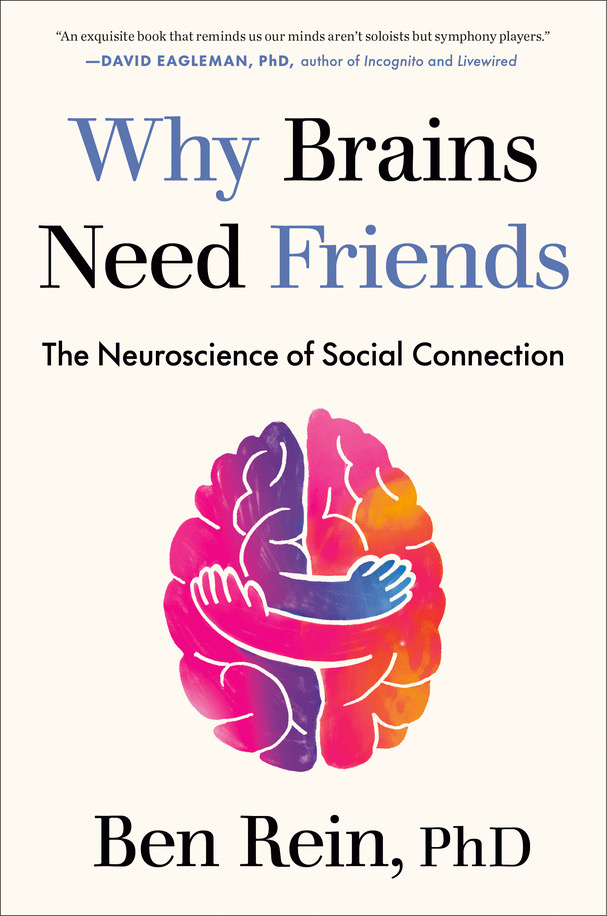
Ben Rein, PhD is an award-winning neuroscientist, author, and science communicator. He is the Chief Science Officer of the Mind Science Foundation, Adjunct Lecturer at Stanford University, Clinical Assistant Professor at SUNY Buffalo, and Chief Science & Strategy Officer for Off Script Society. He has published over 20 peer-reviewed papers on the neuroscience of social behavior, and is the author of the Penguin Random House book, Why Brains Need Friends: The Neuroscience of Social Connection.
Rein also shares educational neuroscience videos on social media to an audience of more than 1.2 million followers. He has been profiled by The Guardian, featured on Entertainment Tonight, and joined 100+ podcasts including StarTalk with Neil DeGrasse Tyson, 10% Happier with Dan Harris, and Barstool Sports. His science outreach has been recognized with awards from the National Academies of Sciences, the Society for Neuroscience, and elsewhere.


Featured Space with

What makes friendships last?
Discover the invisible forces within that sustain human connection, from neural synchrony and mirror neurons to the magic of oxytocin. With neuroscientist Dr. Ben Rein as your guide, examine how social bonds are built, tested, and strengthened in the brain and body.
Related Discoveries

This is your brain on dogs
Spending time with dogs can affect our brains, bodies, and emotions. Consider the neuroscience of the human-canine bond.
How “bad predictions” hinder our relationships
We often misjudge how socializing will make us feel. Consider why time with others may be more energizing than expected.

How love heals us
The chemistry of connection reaches far beyond the heart. Explore love’s surprising effects throughout the body.

What animals teach us about empathy
Empathy may not be uniquely human. Consider the surprising ways animals respond to the feelings of others.

How MDMA enhances empathy
Mice on MDMA became more sensitive to each other’s pain. Explore what this reveals about empathy in the brain.

The magic of interbrain synchrony
Two brains can sync during moments of connection and teamwork. Discover the science behind being “on the same wavelength.”


